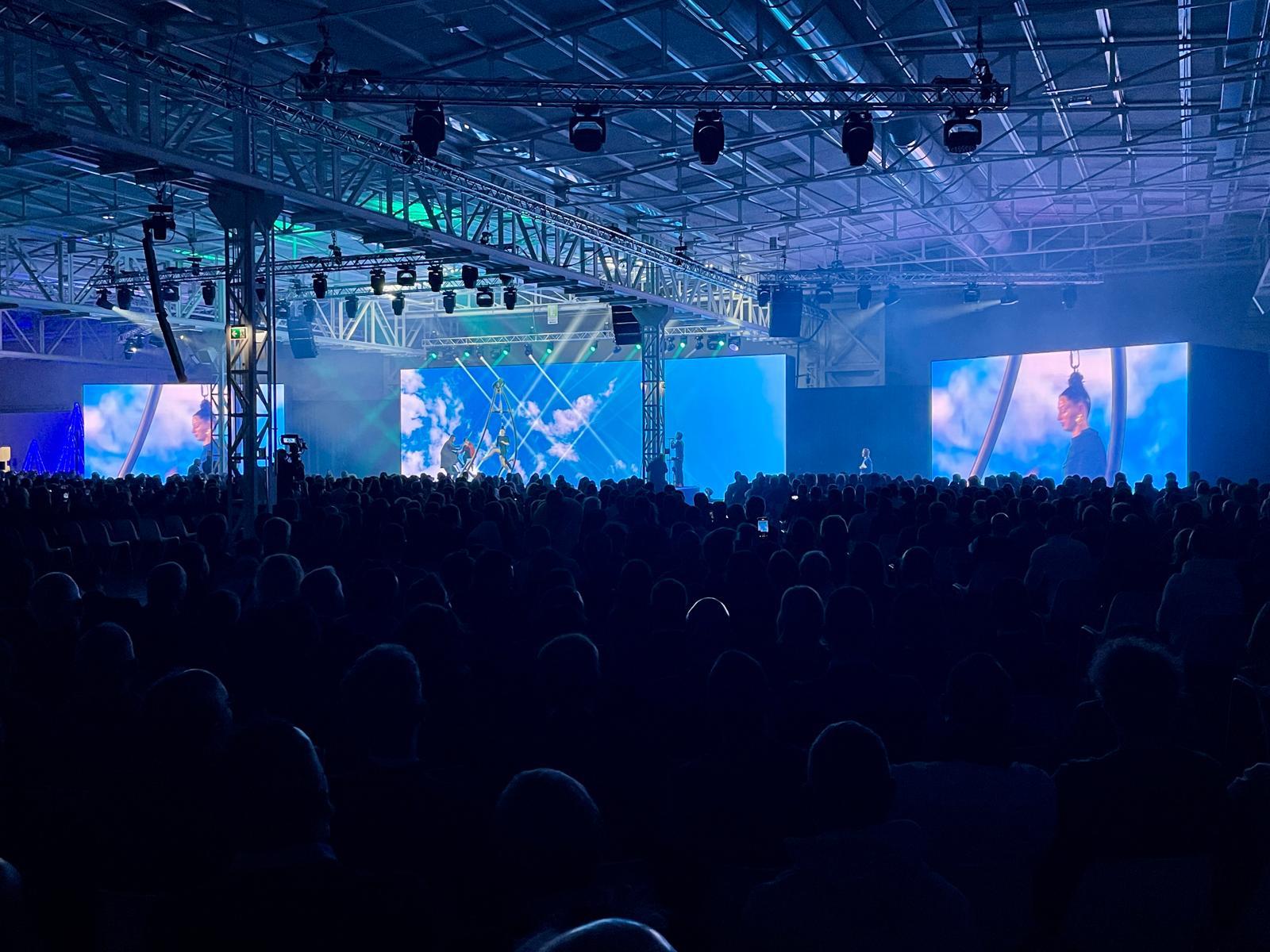


In today’s event landscape, one of the most exciting and innovative trends is the emergence of hybrid events.
These events, which combine physical and digital participation, are transforming the way companies connect with their customers, partners, and collaborators.
Understanding the value of hybrid events is essential to staying ahead of the curve and meeting the needs of an increasingly global and interconnected audience.
What is a Hybrid Event?
A hybrid event is a meeting that combines elements of traditional in-person (live) and digital (virtual) events.
Participants can choose to attend in person or follow the event online, via digital platforms, video streaming, or interactive webinars.
This dual experience allows you to expand your audience, transcending geographic and temporal barriers, while ensuring an immersive experience even for those who cannot be physically present.
Why Are Hybrid Events Important?
- Global Accessibility
The ability to participate remotely allows anyone, anywhere, to engage with the event. This is particularly useful for companies that want to reach an international audience or lack the capacity to host large numbers in a physical venue. - Flexibility and Inclusivity Not all attendees can be physically present due to time, budget, or other constraints. Hybrid events offer a solution that makes the experience accessible to all, allowing for greater inclusivity and the ability to offer tailored content for each type of attendee.
- Increased Engagement The digital component of hybrid events offers numerous opportunities to interact with the audience through chats, real-time polls, Q&A sessions, and virtual networking. Digital platforms also allow you to leverage social media to create a shared experience, amplifying the event’s impact.
- Improved Return on Investment (ROI) With the ability to reach a wider audience without geographic or logistical limitations, hybrid events offer a higher return on investment than traditional events. Travel and logistics costs are reduced, while the opportunity to engage more people generates greater visibility and sales opportunities.
- Duration and On-Demand Content Unlike physical events, hybrid events offer the option to record and distribute content online, allowing attendees to enjoy sessions even after the event has ended. This increases the longevity of the content, creating new marketing and loyalty opportunities.

Technical Production of Hybrid Events: The Key to Success
Staging a successful hybrid event requires precise technical planning and seamless integration between the physical and digital components. Here are some of the crucial technical aspects:
- Streaming Technology and Digital Platforms
Choosing the right platform is crucial. Platforms like Zoom, Microsoft Teams, or more specialized event solutions like Hopin or On24 allow you to manage large numbers of participants and integrate features like chat, polls, and virtual networking sessions. The quality of the video streaming is equally important: a stable connection, quality lighting, and audio are essential for a seamless experience. - Innovative Technical Setups Hybrid events require setups that can quickly adapt to different scenarios.
High-brightness LED walls, intelligent audio systems, and targeted lighting allow for the creation of sets that work both live and streamed.
The room layout also changes: more compact configurations are favored, designed for video quality and to facilitate the director’s movements. - Synchronizing Physical and Virtual Participation A hybrid event must offer a seamless transition between in-person and online audiences. This requires well-synchronized camera systems, microphones, lighting, and projectors. Transmission quality must be optimal so that virtual attendees never lose track of the event. Real-time interaction management must be coordinated to ensure that online attendees’ questions and comments are read and answered by speakers during the event.
- Networking Planning One of the challenges of hybrid events is creating networking opportunities for both in-person and virtual attendees. Technology can help, but it must be designed so that online users can interact with in-person attendees through chat, video calls, or even dedicated virtual “rooms.” Modern platforms allow for matchmaking between attendees, suggesting connections based on common interests.
- Real-Time Events and Interactivity Hybrid events must be designed to foster interaction. Virtual attendees should feel an integral part of the event, with opportunities to ask questions and interact with speakers and other attendees. The use of real-time chat, polls, and interactive quizzes is an excellent way to maintain attention and engagement.
- Post-Event Content Management Content recording is a key part of hybrid events. Accessing videos and recordings makes the experience accessible even after the event concludes, allowing you to reach a wider audience. A good content management system (CMS) and a distribution strategy can make the difference in maintaining engagement even after the event has ended.
In Conclusion: The Future of Events is Hybrid
Hybrid events represent a significant breakthrough in corporate event planning and production. With the right technology and careful planning, companies can deliver extraordinary experiences to a global audience, creating deeper connections, increasing visibility, and optimizing return on investment.
Take Your Event to the Next Level with DHS Event Solution
At DHS Event Solution, we specialize in the technical production of hybrid events, offering tailored solutions to ensure a flawless experience for both in-person and virtual attendees. Thanks to our extensive experience and the use of cutting-edge technologies, we are able to create events that combine quality, innovation, and global accessibility.